

When a child has a damaged or decayed baby tooth, parents may naturally wonder why a dentist would consider treating a tooth that will eventually fall out.
Baby teeth are temporary, but they still serve important purposes while they remain in the mouth. They help children chew and speak, and they can help maintain space as the permanent teeth develop.
That does not mean every damaged baby tooth should be saved.
When deciding whether to save a baby tooth, a pediatric dentist considers the condition of the individual tooth, the child’s stage of dental development, how long the tooth is expected to remain, and whether it can reasonably be restored.
At Little Smiles Pediatric Dentistry, treatment planning is individualized so parents can understand why a particular option is being considered and how it fits into their child’s overall dental development.
Why Can Saving a Baby Tooth Matter?
Primary teeth continue to have a job until they are naturally replaced.
They support chewing and speech while a child grows. They can also help maintain space during dental development.
Because of those functions, a cavity or other problem does not automatically make a baby tooth unnecessary.
At the same time, the goal is not to preserve every primary tooth at all costs.
The better question is whether maintaining that particular tooth remains appropriate based on its condition and how much longer it is expected to be useful.
What Does a Dentist Consider Before Making the Decision?
There is rarely one factor that determines whether a baby tooth should be treated or removed.
A pediatric dentist may consider:
- How much healthy tooth structure remains
- How extensive the decay or damage is
- Whether the pulp inside the tooth has been affected
- Whether the tooth can reasonably support a restoration
- The child’s stage of dental development
- How long the tooth is expected to remain before natural shedding
- The condition of the surrounding gums and teeth
- The development of the permanent tooth
- Whether pain, swelling, or other symptoms are present
- The child’s overall treatment needs
A tooth with significant damage may still be treatable in one situation, while a different tooth may no longer be a reasonable candidate for preservation.
That is why the decision cannot be made based only on the size of a cavity or the fact that the tooth is primary.
How Does Restorability Affect Whether a Baby Tooth Can Be Saved?
One of the most important questions is whether the tooth can still be restored appropriately.
When the damage is relatively limited and enough healthy tooth structure remains, tooth-colored fillings may be considered.
If a larger portion of the tooth has been affected, a pediatric dental crown may provide more coverage than a filling.
The decision between these options depends on the individual tooth. A filling is not automatically preferable simply because it is a smaller restoration, and a crown is not automatically necessary whenever a baby tooth has substantial decay.
The dentist considers how much healthy structure remains and what type of restoration, if any, the tooth can reasonably support.
What If the Pulp Inside the Baby Tooth Is Affected?
A deeper cavity or injury may reach the pulp inside the tooth.
In selected cases, pulp therapy may be considered when the tooth is otherwise suitable to remain in the mouth.
Pulp therapy addresses affected tissue inside the tooth. It does not, by itself, answer whether the tooth should be preserved.
The dentist still needs to consider the remaining tooth structure, the child’s development, the expected life of the tooth, and whether the tooth can be restored afterward.
Little Smiles Pediatric Dentistry confirms pulp therapy, sometimes described as baby root canal treatment, among its pediatric services.
How Do Development and Timing Affect the Decision?
The same type of damage may lead to different recommendations depending on where a child is in dental development.
A baby tooth that would normally be expected to remain for a meaningful period may provide more benefit if it can reasonably be treated and maintained.
A tooth that is already approaching its natural shedding period may be viewed differently.
This does not mean there is one age cutoff that determines whether treatment is worthwhile.
Children develop at different rates, and different primary teeth are naturally replaced at different stages. The dentist considers the individual tooth and the child’s development rather than relying on age alone.
What About the Permanent Tooth Underneath?
The permanent tooth developing beneath a primary tooth is also part of the treatment-planning picture.
A pediatric dentist may consider how the baby tooth relates to the developing permanent tooth and where the child is in the transition between primary and permanent teeth.
That does not mean every cavity, injury, or infection in a baby tooth will affect the permanent tooth.
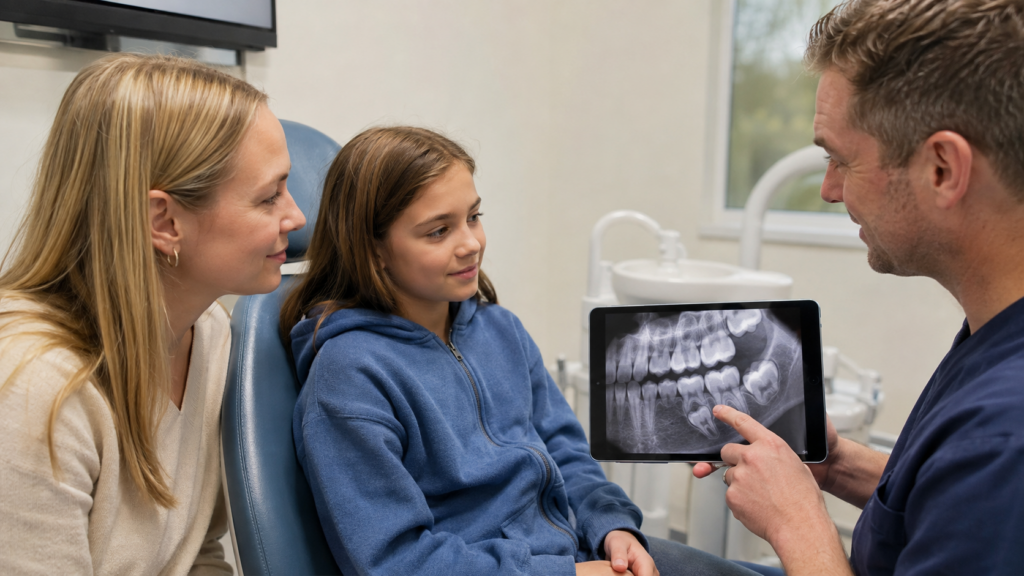
When additional information is needed, digital dental X-rays may help the dentist evaluate the teeth and their development. Digital dental X-rays are among the confirmed services at Little Smiles Pediatric Dentistry.
When Might Removing the Baby Tooth Make More Sense?
Sometimes a primary tooth cannot reasonably be restored or maintained.
Removal may be considered when there is extensive damage, significant infection, too little healthy tooth structure remaining, or another condition that makes preservation inappropriate.
Timing can also matter. A tooth that is already nearing natural shedding may not be managed the same way as one that would otherwise be expected to remain for much longer.
Little Smiles’ supplied site pages include pediatric tooth extraction services, but the article should keep extraction secondary to the decision-making process rather than turning into another extraction guide.
When removal is recommended, it does not mean the dentist has simply decided the baby tooth is unimportant. It means the evaluation suggests that maintaining that particular tooth is no longer the more appropriate option.
What Happens If a Baby Tooth Is Removed Early?
When a primary tooth is lost before the permanent tooth is ready to replace it, the dentist may also consider what happens to the space that remains.
In selected situations, a space maintainer may be considered to help preserve space during dental development.
A space maintainer is not automatically required after every early tooth loss.
Whether one is appropriate depends on factors such as which tooth was lost, the child’s stage of development, and the expected eruption of the permanent tooth.
This is another reason the decision to remove a primary tooth involves more than simply asking whether the damaged tooth itself can come out.
Do Pain and Other Symptoms Determine Whether the Tooth Can Be Saved?
Symptoms provide useful information, but they do not make the decision by themselves.
Pain, sensitivity, swelling, difficulty chewing, discoloration, or changes following an injury are all important things for parents to mention.
However, a child can have a significant dental problem without obvious discomfort. A child can also have pain from a tooth that remains treatable.
The dentist therefore evaluates the actual condition of the tooth rather than deciding solely according to how much it hurts.
Likewise, the absence of pain does not necessarily mean a damaged or decayed baby tooth should simply be ignored.
What Questions Should Parents Ask About the Treatment Plan?
Parents should feel comfortable asking why a pediatric dentist recommends saving or removing a baby tooth.
Useful questions may include:
- Can this tooth reasonably be restored?
- How much healthy tooth structure remains?
- Why do you recommend preserving the tooth?
- Why might removal be more appropriate?
- Has the pulp been affected?
- Would a filling, crown, or pulp therapy be considered?
- How long is the tooth expected to remain?
- What is happening with the permanent tooth?
- If the tooth is removed, would a space maintainer be considered?
- What could happen if treatment is delayed?
These questions help shift the conversation away from simply asking, “Why treat a baby tooth?” and toward understanding what the dentist sees in the individual situation.
How Does the Dentist Evaluate the Tooth?
A pediatric dental exam gives the dental team an opportunity to evaluate the tooth, surrounding tissues, symptoms, dental history, and development.
Additional diagnostic information, including dental X-rays when appropriate, may also contribute to treatment planning.
Little Smiles Pediatric Dentistry emphasizes parent education and personalized pediatric care, so the recommendation should be explained in terms parents can understand.
The practice also uses Tell, Show, Do as part of its child-centered approach. This can help the dental team explain steps in an age-appropriate way without promising that every child will feel completely anxiety-free.
Saving a Baby Tooth Is an Individual Decision
There is no universal rule that every damaged baby tooth should be saved.
There is also no rule that a significantly damaged primary tooth should automatically be removed simply because a permanent tooth will eventually replace it.
The decision depends on the condition of the tooth, how much healthy structure remains, whether the tooth can reasonably be restored, pulp involvement, the child’s dental development, and how long the tooth is expected to remain.
Depending on those findings, the treatment plan may involve a filling, pediatric crown, pulp therapy, removal, monitoring, or another appropriate approach.
The important part is understanding why that recommendation fits the individual child and tooth.
Little Smiles Pediatric Dentistry focuses on evidence-based, compassionate pediatric care and helping parents understand their children’s treatment needs.
If you are concerned about a damaged or painful baby tooth and want to understand whether it can be preserved, contact Little Smiles Pediatric Dentistry to schedule an evaluation.